
You Have Agency
How to take it back in 3 simple steps


Agency is your power to act. You have agency whether or not you feel it. Even an amoeba has agency, because it constantly decides whether to swim forward or change direction. You cannot control the world, but you can decide whether to continue what you’re doing or try something else. We swim in an ocean of unknowns, but we always have choices.
Today’s culture denies your agency. It says “it’s not your fault” in every situation. It invites you to point fingers of blame.
When you scroll online, blame the algorithm.
When you eat too much, blame food producers.
When you drink too much, blame “the culture.”
When you spend too much, blame corporate marketing.
When you fight with people, blame their “narcissism.”
When you use illegal drugs, blame the war on drugs.
When you abuse legal drugs, blame the healthcare system.
When you don’t do your work, blame the boss or the teacher.
When you’re broke, blame “the system.”
When you make bad choices, blame your parents.
When you choose bad company, blame your “vulnerability.”
When you get caught breaking the rules, blame the rules.
When you’re sad, blame your genes and “our society.”
But it IS their fault, you may insist. Why should I take the blame?
You can cite plenty of “evidence” that it’s THEIR fault. You have been trained in the blame mindset by teachers, family, and friends, as well as the digital realm. In your early years of neuroplasticity, you learned that blame-shifting is rewarded. Mirror neurons equip us to mirror behaviors that work for others, and finger-pointing often works for others.
But like a drug, it feels good now and hurts you later. It feels good because it brings social support. Yet hurts in the long run because it makes you a powerless victim of external forces. You lose the pleasure of your own agency. So, like any drug, you keep needing more to keep feeling good. You spend energy on the blame game that you could have spent building your own agency.
You can break this habit. Here are 3 simple steps for doing that. They may sound harsh at first, but they’re the true path to happiness because happy chemicals evolved to reward action that meets your needs.
1. Focus on your next step
A gazelle will always live in a world full of predators, but it survives by focusing on its next step. It doesn’t fight with lions. It saves its mental and physical energy for carefully chosen steps to a better place.
You may wish gazelles fought back. You may imagine yourself fighting evil, but you define “evil” with the abstracting part of your brain. Our abstracting cortex often misrepresents the world by ignoring contradictory facts. For example, lions fail in 95% of their chases, and when they succeed, hyenas and stronger lions often steal their kill. Meanwhile, gazelles often shove weaker gazelles aside to get more food and mating opportunity. There are no simple good guys and bad guys in nature.
The point is not that you should shove others to meet your needs. The point is that black-and-white models of good and evil do not lead to good decisions. A creature needs to see past abstractions to find its best next step.
2. Celebrate your dopamine
The great feeling of dopamine turns on when you step toward meeting a need. You only get a small drip of dopamine from each step, but you keep feeling it if you keep stepping. When your steps fail to approach the reward you seek, cortisol turns on. This “stress chemical” evolved to warn us of threats to meeting needs. We all have stress because rewards are not as predictable as we expect. Failed efforts trigger cortisol, so we can’t banish it from our lives, or our children’s lives.
Anyone can relieve cortisol by stepping in a new direction. The joy of dopamine replaces the angst of cortisol as soon as you see a reward get closer. New steps fail sometimes, of course, and you have to try another, like a gazelle changing course while escaping a lion. Responding to cortisol by trying something new is a learned skill, and it’s the most valuable skill you can have.

You don’t build this skill when you blame the lion for your distress. Children don’t build the skill when parents blame distress on forces outside their control. If gazelles taught their children to fight lions, the species would disappear. It’s hard to focus on your next step once your cortisol turns on. It’s tempting to fill your mind with “evidence” that “they” are the problem. But your brain rewards you with dopamine if you set a new course and start stepping.
3 . Repeat
The brain is wired by experience, so a new choice becomes your new normal if you repeat it enough. But it’s hard to get yourself to do this because old wiring is so powerful. Our brain builds its highway system in youth when we have a lot of the road-building material called myelin. Your myelinated pathways are so big that the electricity in your brain flows there effortlessly. When you try to change, it’s like trying to redirect a river into a soda straw.
We can build new neural pathways later on, but it takes more repetition than you expect. It’s as hard as learning a foreign language. Children learn languages without conscious effort, but later on, it takes so much repetition that most people give up. It’s the same with our emotional wiring: we built it without effort in childhood, but we can add on if we do enough repetition.
How can you get yourself to repeat something that doesn’t feel good? Animal trainers teach old dogs new tricks by giving treats when a new step is taken. You may think you are too sophisticated to be motivated by treats. You may insist that you are motivated by higher values. But your mammalian limbic system will link the good feeling of the treat to the new behavior you are trying to learn. You can design healthy treats and save them for moments when you actually repeat the new behavior. You will feel your agency when you do this!
Agency builds when you use it.
Each time you redirect yourself from stress to a next step, you build the pathway that makes it easier next time. You won’t do this if you believe it’s impossible. If you think your genetics make it impossible, or “the system” makes it impossible, you will find other ways to relieve stress. When your stress relievers have bad consequences, you will blame forces outside your control. This mindset is all around us, but you can find your agency anyway.
It’s easier when you know how our brain works. It rewards you with dopamine as soon as you expect something to work. Your expectations will be wrong sometimes, but then you can generate another positive expectation.
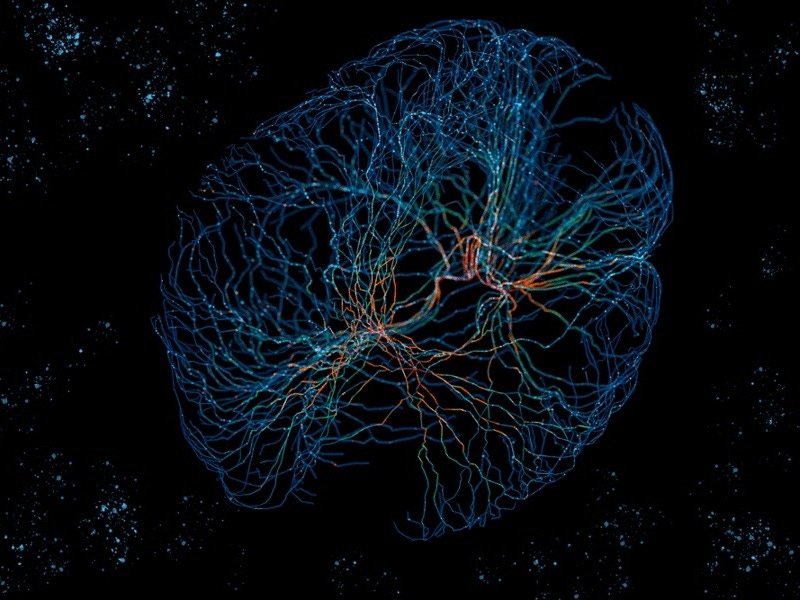
Expectations are real physical pathways in your brain. Positive expectations are dopamine pathways paved by dopamine moments of your youth. Negative expectations are cortisol pathways paved by early cortisol moments. Since new pathways are hard to build, we tend to keep repeating the positive and negative expectations from our past, even when they misrepresent reality. Fortunately, we have the agency to change our expectations once we understand them.
The problem is that negative expectations are bigger pathways, because our brain puts a higher priority on avoiding threat than on finding rewards. And it’s designed to anticipate threats in order to prevent them. This is why we’re inclined to create our own stress. But we can shift attention from threat back to reward, and we can make it a habit.
For most of human history, hunger motivated this habit. To see why, imagine a gazelle munching grass on a sunny day. It seems to have the good life that you think you’re missing out on. But in fact, gazelles are always hungry because it takes a full day of chewing to get enough nutrition from grass. Threats often interrupt their efforts to meet their needs, so they have to relieve the threat before relieving their hunger. They are constantly choosing which need to meet and which step to take. This is a mammal’s agency.
Why does our culture deny a person’s agency?
When we say “it’s not your fault,” we call it “compassion.” When we blame the system, we call it “empowerment.” Opinion leaders even deny the existence of free will and call it “helping people.”
Those who deny your agency are not doing it for you because you do not benefit. They benefit, because it helps them win your support. We mammals bond around common enemies. From politicians to academics to therapists to lovers, co-workers, friends, relatives, and online strangers, people point to threats because a shared sense of threat is the social glue of the mammal world. Mammalian leaders promise to protect you from threat and it helps them gather followers.
You may like the promise of protection, but you discover that it’s just an abstraction. Fortunately, you get to decide how to meet your real needs. You have the agency to weigh threats and design your own path to safety. Never say that others “took” your agency because that denies your agency! You are always choosing, even when cortisol makes it hard.
I used to live in the blame world. I used to point out the flaws in the world and wait for happiness to come from a change in the world. It was a waste of time and energy, but I finally kicked the habit and found my agency. You can too. I explain simple steps in my book, Habits of a Happy Brain: Retrain your brain to boost your serotonin, dopamine, oxytocin and endorphin levels.
It may seem hard to leave the herd and choose your own next step, so it’s useful to know that gazelles do not follow the herd all the time. If they did, they’d end up eating grass that was soiled by others, which makes them sick. So they go their own way to find greener pastures, until a threat motivates a return to safety in numbers. However, a gazelle is on its own when a predator attacks. Each gazelle puts one foot in front of another, and strives to pass others to avoid being the one that’s eaten. Each brain is constantly choosing where to step next, even when it looks like a herd is moving together.
Gazelles don’t think of themselves as a powerless victims of external forces. They don’t have enough neurons to create such abstractions. You have a lot more neurons, and it would be a shame to waste them creating the belief that you are a powerless victim.
The most empowering thought an adult can have is "it's my fault." You're not responsible for everything that happened to you in childhood, but once you're independent you have to take ownership of all your bad habits and coping mechanisms. Unwinding things you may well have had good reasons for developing in the first place. Blaming others locks their power over you in. Taking responsibility for your own thoughts and decisions is the required first step to improving your situation.